
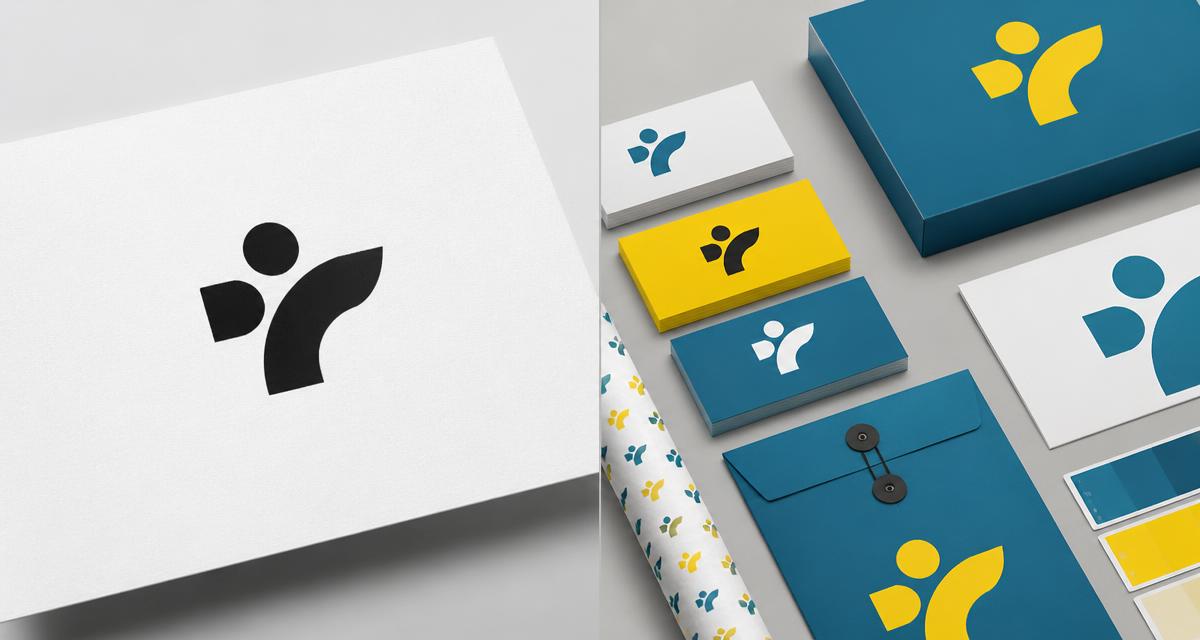
A logo is not a brand identity, and a brand identity is not a substitute for strategy. All three matter, but they solve different problems, and most small businesses overpay for one while underinvesting in another. Here's how to tell which level your business actually needs right now.
Logo: one mark, doing one job
A logo is the single visual mark that represents your business, the thing people recognize on a storefront, a card, or a website tab. On its own, it doesn't tell your team what color to use on a flyer, what font goes on a proposal, or how to lay out a social post. It's a starting point, not a system.
A logo-only project makes sense for a business with very few current touchpoints and a clear enough sense of direction that inconsistency isn't yet a problem. It's a lighter, faster investment, and a reasonable one for an early-stage business.
Brand identity: the system the logo lives inside
A full brand identity system includes the primary logo, secondary marks, a type and color system with usage rules, and typically a guidelines document your team can actually follow. Our earlier piece on what actually goes into a brand identity breaks down the components in more detail.
The test for whether you need this level: when someone on your team needs to design something that isn't already in the file, a proposal, a sign, a social post, can they open the guidelines and know what to do? If the answer is no, or if every piece of marketing you produce looks like it came from a different company, you've outgrown logo-only.
The Glam Shores identity system shows this well: naming, logo, color palette, typography, and voice guidance all documented together, so the founder could keep producing on-brand content long after the initial engagement ended.
Strategy plus identity: when positioning needs to change first
Sometimes the visual problem is really a positioning problem in disguise. If leadership can't agree on what makes the business different in one sentence, no amount of design work fixes that. Brand strategy work, positioning, audience research, and messaging, needs to happen before or alongside the identity work in that case.
The TopDog Fireworks rebrand is an example of this level of engagement: a business operating multiple divisions across many locations needed one clear system before any single logo redesign could actually solve the underlying inconsistency.
Not sure which level fits your business? Talk it through with us.
Book a free 30-minute callA simple way to decide
Ask yourself these questions
- Can everyone on the team describe what makes the business different, in the same words? If not, start with strategy.
- Do you have more than two or three regular marketing touchpoints (website, signage, print, social, packaging)? If yes, you likely need a full identity system, not just a logo.
- Does every piece of marketing you produce currently look like it came from a different company? That's an identity gap, not a logo gap.
- Is your current mark actively hurting how the business is perceived, or is it just underdeveloped? The first is a bigger fix than the second.
- Do you have the volume of production (multiple people designing things regularly) that would benefit from documented rules? If yes, guidelines pay for themselves quickly.
What each level actually gets you
- Logo only: a primary mark plus basic variations and production files. Solves recognition, not consistency.
- Identity system: logo family, color and type system, usage rules, and core templates. Solves consistency across touchpoints.
- Strategy plus identity: positioning, audience and messaging work feeding the visual system. Solves the deeper problem of what the business is saying and to whom.
The cost of choosing the wrong level
Underbuying looks like this: you get a logo, then spend the next year making one-off decisions about color, type and layout on every flyer, proposal and post. Each decision is small, but they add up to a business that looks different everywhere, and to design time you pay for twice. Overbuying looks different: a thick guidelines document for a business with one website and a storefront sign, most of which nobody opens.
The honest answer for most small businesses sits in the middle. You need a mark that can flex, a short set of rules that a non-designer can follow, and files that work in the places you actually publish. Anything beyond that can wait until the business grows into it. If you are unsure which side of the line you are on, count your touchpoints and count the people producing marketing material. Two numbers usually settle the argument.
The upgrade path
None of this has to happen all at once. A common, reasonable path is: start with a logo built to support a larger system later, add the full identity system once you have enough touchpoints to need consistency, and bring in strategy work whenever positioning becomes unclear or the business changes direction. Day-to-day graphic design work gets easier at every stage of that path, because there's more of a system to build from instead of starting from scratch each time.
If you're trying to figure out where your business currently sits on that path, our Houston small business branding page covers how these engagements are usually scoped, and we're glad to talk through your specific situation directly.
Get a straight read on which level of branding your business needs right now.
Schedule a discovery call