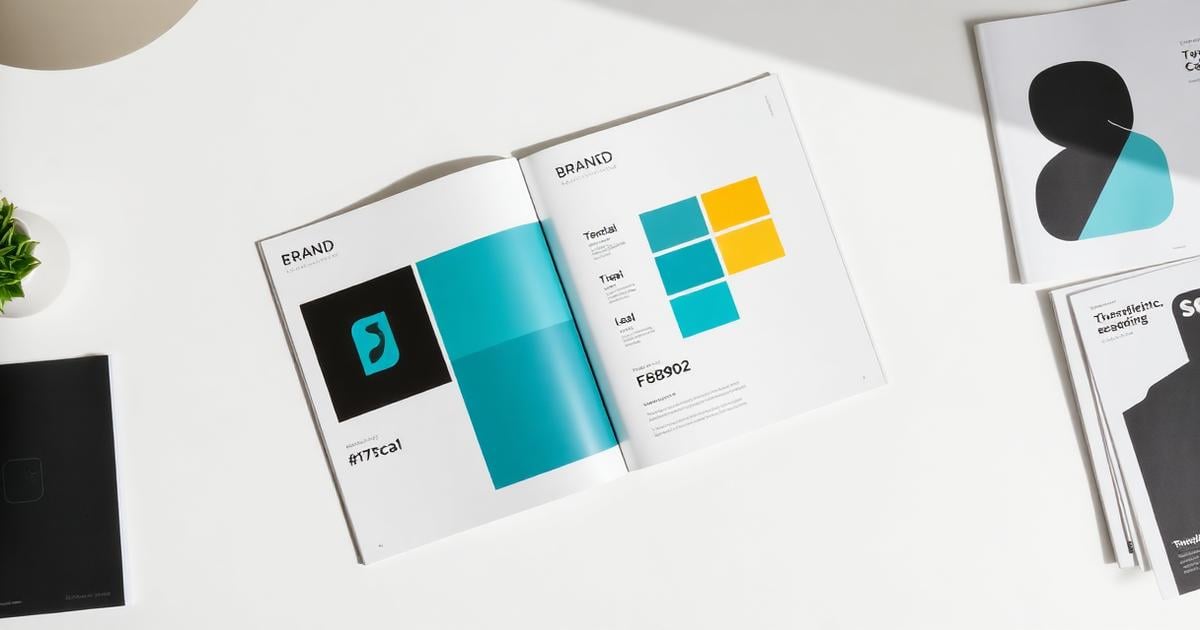
The most common misunderstanding we run into is that a logo and a brand identity are the same thing. They aren't. A logo is one visual mark. A brand identity is the system that mark lives inside, the type, color, layout rules and voice that make everything you produce feel like the same company. That system is what our brand identity and logo design work actually delivers.
A logo is one asset. An identity is a set of decisions.
A useful identity system gives your team answers, not just files. When someone needs to design a proposal, a sign, or a social post, they should be able to open the guidelines and know what to do without asking.
What belongs in a real identity system
Identity system checklist
- Primary logo plus secondary marks and a monogram or icon for small sizes
- A type system with clear roles for headlines, body and captions
- A color system with usage rules, not just hex codes
- Contrast and accessibility guidance for real backgrounds
- Brand voice guidance so writing matches the visuals
- Templates for the touchpoints you actually use most
- Master vector files plus raster exports at usable sizes
The Glam Shores case study is a good example of what that looks like end to end, from naming through a full brand style guide. The YONG brand system shows the same idea applied across menus, signage, packaging and a website.
Why strategy usually comes first
Most identity decisions get easier when positioning is settled first, which is why identity work usually follows brand strategy. Once the system exists, day-to-day graphic design stops being a debate and starts being production.
How to read a branding proposal
- Ask what happens the first time someone needs to design something that is not already in the file.
- Ask which source files you own at the end, and in which formats.
- Ask whether guidelines are included, and who they are written for.
- Ask how the system behaves in print, on a sign and at favicon size.
If you run a smaller local company, our Houston small business branding page walks through how these engagements are usually scoped. For the difference between a refresh and a full rebrand, read when to rebrand and when to just refresh.
Have a proposal in hand and want a second opinion on what is actually included?
Book a free 30-minute call